




How much does general liability insurance cost?
Commercial general liability insurance is often one of the first policies that most small businesses purchase. General liability costs depend on a variety of factors, including your industry, claims history, location, policy limits, and deductible.
What do small businesses pay for general liability insurance?
Small businesses pay an average premium of $45 per month for general liability insurance. Annual policy premiums generally range from $250 to more than $3,000 per year, with the exact cost depending on several factors specific to your business.
General liability insurance covers accidents that cause harm to third parties and customers. This policy is exceptionally important for businesses with storefronts and heavy foot traffic, but it also costs more for these businesses as well. Other factors can influence your general liability insurance costs, such as your revenue, business location, policy limits, and deductible,
Our figures are sourced from the median cost of policies purchased by TechInsurance customers from leading business insurance companies. The median provides a better estimate of what your business is likely to pay because it excludes outlier high and low premiums.
Common general liability insurance premiums for TechInsurance customers
TechInsurance's customers pay around $45 per month for general liability insurance.
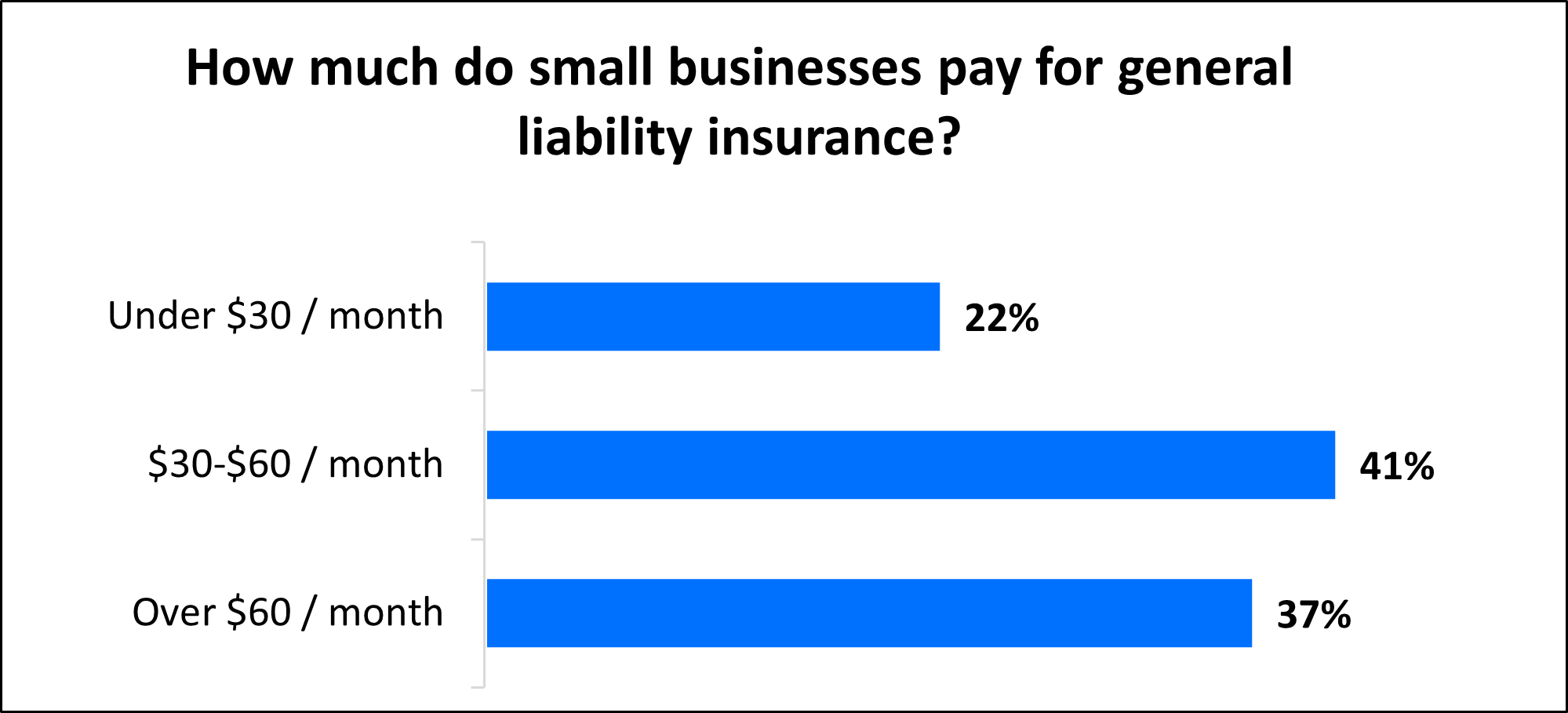
22% of customers pay less than $30 per month, while 41% pay between $30-$60 per month for their general liability coverage. Annual premiums range from less than $265 to $3,030 per year.
General liability costs vary based on factors such as your business size and the amount of insurance coverage you purchase.

Key factors that affect general liability insurance costs
Here are the top factors that impact your commercial liability insurance costs:
Policy limits
The cost you pay for general liability insurance depends on your coverage limits. Most small business owners (85%) opt for a general liability policy with a $1 million per-occurrence limit and a $2 million aggregate limit, though some policyholders elect for higher coverage limits to protect against more expensive incidents.
A $1 million per-occurrence limit means that, while the policy is active, the insurance provider will pay up to $1 million for a single accident. A $2 million aggregate limit means that the insurer will pay up to $2 million to cover all claims for a policy period, usually a year. 5% of TechInsurance customers elect to carry a $2 million / $4 million policy.
General liability insurance covers most third-party risks. Companies with a storefront or frequent client interaction should consider higher policy limits as they’re more susceptible to bodily injury, property damage, and advertising injury lawsuits.
Higher limits cost more, but they cover more expensive claims. For example, medical payments for customer injuries can be very expensive if paid out of pocket. The right coverage can help you avoid hefty payouts for incidents that happen during the course of business.
Business location and operations
Your business operations and location can have a huge impact on the monthly premium you pay. For example, businesses in areas with higher crime rates or increased foot traffic may have to pay higher premiums than those in areas with lower levels of these factors.
For example, a busy IT staffing agency with people constantly coming and going will pay more for this policy than a web designer’s office that only sees a few clients a month.
While general liability insurance is recommended for all small businesses, most state laws require small business owners to carry workers' comp if they have employees, and commercial auto insurance if they have business-owned vehicles.
Some examples of the average cost of liability insurance around the United States:
State | General liability insurance cost |
|---|---|
$42 per month | |
$55 per month | |
$44 per month | |
$43 per month | |
$47 per month | |
$42 per month | |
$54 per month | |
$42 per month | |
$47 per month | |
$42 per month |
Which small business insurance policies does your state require?
Industry
Your industry is a major factor in determining your general liability insurance rates. Riskier industries will have to pay higher general liability insurance premiums than low-risk industries.
For example, businesses in industries with a reputation for filing more claims, such as computer repair, construction, or work involving other people’s property, will likely pay more for business liability insurance.
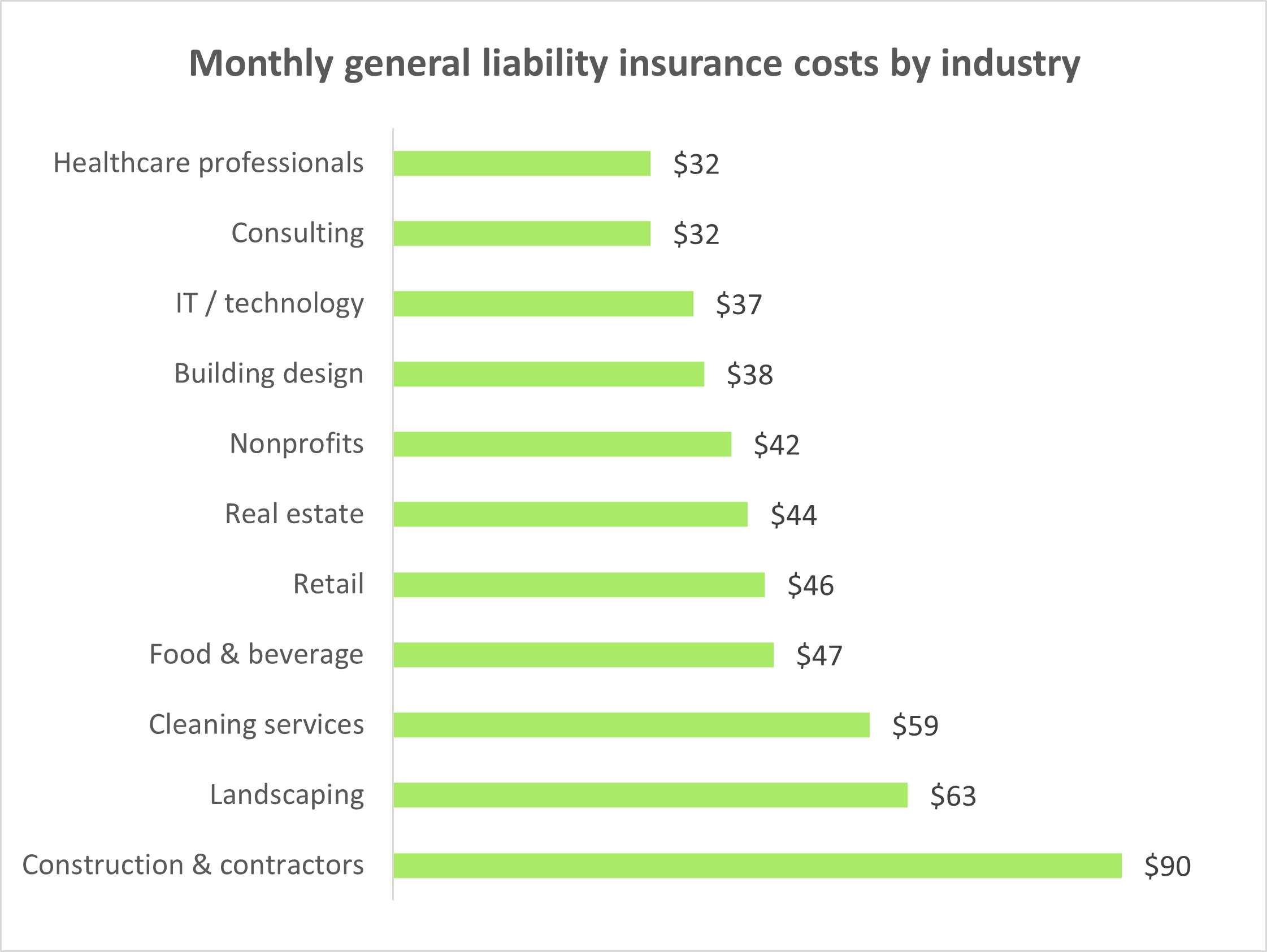
In some instances, such as with construction, you may even be legally required to carry general liability insurance, depending on your state and local regulations. The average construction professional will pay the most at $90 per month. Landscapers are also considered higher-risk and pay $63 per month.
General liability insurance is much less expensive for other industries that traditionally see fewer claims. Examples include healthcare and consulting, where business owners in these industries pay $32 per month on average.
This policy helps cover the damage that you or your employees cause to third-party property, as well as injuries that occur on your business property.











Deductible
Policies with high deductibles cost less, but you’ll have to pay that amount before you can collect on a claim. Most TechInsurance customers choose a $500 deductible for general liability insurance.
Be sure to pick a deductible your business can afford, if necessary, as insurance providers generally will not pay claims if you cannot cover the deductible.
Claims history
Number of employees
It's simple: The more employees you have, the more opportunities there are for an accident to occur or a client to file a lawsuit.
For example, if you own a restaurant, the larger your workforce, the more opportunities there are for incidents, accidents, and customer injuries, such as a waiter accidentally tripping a customer and causing a bodily injury.
Even if you are a freelancer, independent contractor or sole proprietor, it's a good idea to carry general liability coverage to protect yourself from the high costs associated with legal defense and/or medical expenses.
When you apply for insurance, you'll need to provide an inventory of all of your full-time and part-time employees, as well as how many subcontractors and consultants you work with. This helps underwriters accurately determine your risks and costs.
Annual income
Your annual business revenue can impact your insurance costs. In general, the higher your revenue, the higher your insurance premiums.
How much your annual revenue affects your insurance premiums often depends on your industry. Construction businesses, for example, are more sensitive to revenue-based increases than others because underwriters often assume that higher construction revenue is equated to higher risks.
On the other hand, office-based businesses and less risky organizations, such as professional service providers, tend to only experience marginal insurance rate increases due to their specific risks (or lack thereof).
Condition and size of your business premises
The location, physical condition, and size of your business can impact your insurance rates. Larger premises are often considered high-risk due to the increased likelihood of accidents, injuries, and incidents.
Your building's age can also affect your rates, as older buildings tend to have more issues and incidents and fewer accessibility features. Newer buildings with accessibility-friendly designs, such as ramps, can lead to lower rates.
Class code and payroll
General liability classification codes are a system that helps insurers categorize businesses based on the work they do and their respective risks.
These codes estimate potential insurance claims and help insurance providers calculate your general liability insurance premiums.
Businesses with higher-risk occupation class codes will often pay more for coverage.
Years of experience
What does general liability insurance cover for small businesses?
General liability insurance coverage, also called public liability insurance, is one of the most critical policies for many small businesses, particularly those with a storefront or who otherwise interact with the public regularly.
If your business is sued, even if the lawsuit is frivolous, it could be exceptionally expensive and time-consuming. If you lose, you could be paying out a significant amount in settlements, judgments, and legal fees. And without insurance, you'll be paying it out of pocket.
Businesses often need general liability coverage for the following:
Meet client and contract requirements
Many small businesses need to provide proof of general liability insurance to sign a lease for a rental space. Additionally, lenders often require general liability coverage before they'll approve a business loan.
Clients often require general liability coverage before they're willing to sign a contract and hire your business. For example, many commercial contracts for landscapers require general liability insurance before they'll hire your business.
Non-employee bodily injury or property damage
If a third-party visitor to your business sustains a bodily injury, such as a slip-and-fall, your general liability policy will help cover the financial risks from the injury. This includes medical bills and legal costs if the injured person sues.
General liability also covers the costs related to third-party property damage. For example, if an employee breaks a customer's phone while the customer is shopping in a retail store, your general liability policy would cover the cost of repair or replacement.
This coverage typically includes product liability and food contamination insurance, which protects your business if a product you sell or manufacture causes injury, illness, or property damage to a customer or other third party.
Advertising injuries
General liability insurance can protect your business from advertising injuries, including claims of copyright infringement, slander, and libel.
Your business could run into a lawsuit if you or an employee posts questionable content about other businesses or individuals online. For example, if an employee posts a false or defamatory claim on social media about a competitor that causes damages, they could sue.
How can you reduce the cost of general liability insurance?
Get the most out of your policy by considering the following:
- Purchase a business owner’s policy (BOP). Small, low-risk businesses may be eligible for a business owner’s policy. A BOP bundles a general liability insurance policy with commercial property insurance and costs less than purchasing the policies separately.
- Pay the annual premium. When you buy a policy, you can choose to pay your premium monthly or annually. The annual amount costs less than paying by the month.
- Manage your risks. Claims raise your premium – so reduce your risks to avoid claims and keep your premium low.
- Skip unnecessary endorsements. Sometimes endorsements are helpful and add necessary coverage to your general liability policy. But not every business needs every endorsement, and choosing only the policies you need can help save on coverage you don't.
How can you avoid making claims on your general liability policy?
To reduce the chance of a liability claim on general liability coverage:
- Mop up spills promptly to prevent slip-and-fall accidents
- Tape down loose cables
- Create a protocol for social media posts
- Install security cameras to monitor accidents
- Be careful about using images, music, and other intellectual property to avoid copyright infringement claims
- Ensure employees, contractors, and subcontractors are adequately trained and prepared
Though you can’t eliminate every risk, maintaining a safe, hazard-free business property can help prevent conflicts that lead to third-party lawsuits.

Many factors determine which general liability insurance policy is the right one for your business. Here’s how to choose a policy by looking at six different aspects of your general liability insurance quotes.

How do you buy insurance with TechInsurance?
TechInsurance is a trusted insurance expert for cheap small business insurance, no matter the type of work you do or the industry you're in. We help business owners compare quotes from top-rated providers, buy policies, and manage coverage online.
By completing TechInsurance's easy online application today, you can compare free quotes for general liability insurance and other policies from top-rated U.S. carriers. TechInsurance insurance agents are available to help answer any questions you may have.
Once you find the right policies for your business needs, you can begin coverage in less than 24 hours and get a certificate of insurance for your small business.
Verified general liability insurance reviews
Hear from customers like you who purchased general liability coverage.
Learn more about other business insurance costs
Insurance premiums vary based on the types of coverage a business buys. View our small business insurance cost overview or find out how much you can expect to pay for common types of business insurance.
The figures on this page reflect the median cost of policies purchased by 100,000 of TechInsurance's customers. Most of our customers have been in business for five years or less, employ fewer than five people, and generate annual revenues ranging from about $50,000 to over $200,000.